By Lauren | Salt Lake Occupational Therapy
Last updated: October 19, 2026
If you’re wondering what actually happens during a pediatric OT evaluation, this guide is for you. Families in Salt Lake City—and across Utah—can expect a warm, play-based visit focused on your child’s everyday skills and your priorities. We’ll listen first, observe through engaging activities, and use selected measures when helpful. An OT evaluation is not a diagnosis or a may support of services, but it can clarify strengths, needs, and next-step options. If you’re ready to talk through your child’s unique situation, you can request an evaluation using our simple scheduler when it’s right for your family.
What an OT evaluation is—and why it helps
A pediatric occupational therapy (OT) evaluation looks at how a child participates in daily occupations: play, self-care, early school routines, and relationships. It considers motor skills, sensory processing, attention, and regulation—not in isolation, but as they show up in real life. This whole-child lens is central to OT’s role with children and youth (American Occupational Therapy Association).
Because development unfolds over time, an evaluation is a snapshot. It may help answer questions like: What’s making toothbrushing hard? Why are transitions tricky? How can we support fine-motor readiness for prewriting? When needed, OT collaborates with your pediatrician and other providers. Pediatric care teams typically recommend ongoing developmental surveillance and periodic screening to catch concerns early (American Academy of Pediatrics).
If safety is an immediate concern (for example, frequent choking, sudden loss of skills, or self-injury), please contact your pediatrician or emergency services right away.
Step-by-step: What happens during a pediatric OT evaluation in Salt Lake City
Every child and family is different, so we adapt the process. Here’s a general flow so you know what to expect.
A typical flow
- Welcome and goal-setting
- We start by asking what’s going well and what’s hardest right now. Your top three priorities guide the session.
- Parent/caregiver interview
- We’ll talk through daily routines (mornings, meals, play, bath/bedtime), school/daycare observations, and any medical or developmental history you wish to share.
- Child-led observation and play-based tasks
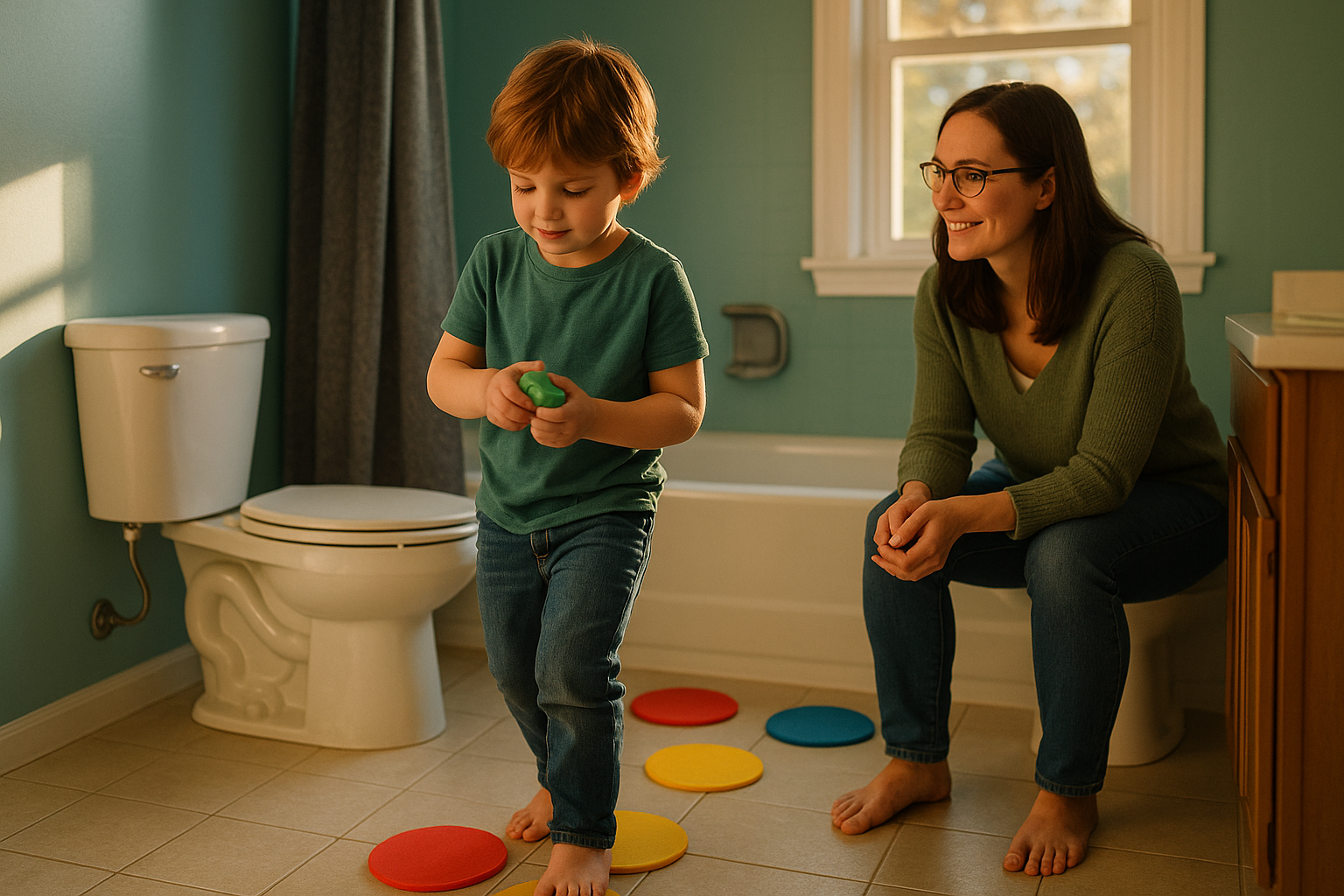
- We watch how your child explores, follows simple directions, and manages transitions using motivating, age-appropriate activities. OT uses play as a window into motor planning, attention, and social engagement (AOTA).
- Sensory and motor check-ins
- Gentle, fun activities can reveal how your child processes movement, touch, sound, and visual input; we also look at posture, strength, bilateral coordination, and grasp.
- Everyday participation “samples”
- Depending on age and goals, we may try buttoning, utensil use, drawing prewriting strokes, or simple obstacle courses to see real-life skills in action.
- Regroup and initial impressions
- We summarize what we noticed, discuss fit for OT, and outline potential next steps. Formal recommendations are individualized and may be shared verbally and/or in writing.
Tools we may use (only when they add value)
- Caregiver questionnaires about sensory processing, routines, or behavior
- Developmental or functional checklists aligned with milestone guidance (CDC developmental milestones)
- Standardized motor or fine-motor measures, used alongside clinical observation and your insights (background information on typical child development: NIH MedlinePlus)
No single test defines your child. We integrate standardized scores (when used) with observations and your family’s goals to create a meaningful, practical picture.
What we look for: sensory, motor, regulation, and participation
OT focuses on what helps your child engage more fully—and what gets in the way. Common areas we consider include:
- Sensory processing and modulation
- How your child notices, tolerates, and uses sensory input (touch, movement, sound, vision). Differences here can affect behavior, attention, and comfort (STAR Institute for Sensory Processing).
- Posture, balance, and motor planning
- Core stability, coordination between both sides of the body, navigating playground equipment, and imitating new movements.
- Fine-motor and visual–motor foundations
- Grasp development, hand strength, bilateral hand use, scissor skills, bead-stringing, puzzles, and early prewriting strokes.
- Self-care routines
- Dressing steps, utensil use, toothbrushing tolerance, handwashing, and toileting independence (age-appropriately).
- Regulation and attention
- How your child starts, shifts, and sustains tasks; how they recover from frustration; and strategies that seem to help.
- Play, social engagement, and early school participation
- Following group routines, turn-taking, sharing materials, and play ideas that spark joy and connection.
We align observations with age expectations and your child’s unique developmental path. Milestone checklists are guides—not pass/fail tests—and some children develop skills on a different timeline (CDC developmental milestones).
After the evaluation: results, reports, and next steps in Utah
Before you leave, we’ll talk through initial impressions and answer questions. Depending on your child’s needs, next steps may include:
- A personalized OT plan with session frequency and home strategies
- Targeted goals tied to your priorities and daily routines
- Collaboration with your pediatrician, teacher, or other providers (with your permission)
- Community or school recommendations that support participation
If sensory processing differences are a core concern, we may discuss approaches informed by sensory integration principles and real-life practice. You can learn more about our approach on our page about sensory integration–informed therapy for kids.
Families in Salt Lake City and elsewhere in Utah can contact us to discuss availability and options that fit your child and schedule. When you’re ready, you can request an evaluation and consultation to explore a plan that matches your goals.
Want preparation tips?
If you’re looking for ways to make the first visit smoother (what to bring, what to tell your child, and simple comfort strategies), see our companion article: How to Prepare Your Child for Their First OT Evaluation in SLC.
What to expect in the days that follow
- You may receive a summary and recommendations; the format and timeline vary based on your child’s needs and the information we’re integrating.
- We’ll check in about how strategies are working at home and school, and adjust as needed.
- If additional referrals could help (for example, vision, hearing, or speech-language evaluation), we’ll discuss options and coordinate with your permission.
Your insights remain central. Small changes—like adjusting the order of morning tasks, offering movement breaks, or modifying seating—can make a big difference when they’re matched to your child’s profile (AOTA).
Editorial note
This article is educational and not medical advice. For personalized guidance, please consult your pediatrician and a licensed occupational therapy provider. Seek urgent care for medical or safety concerns.
References
- Children & Youth. American Occupational Therapy Association (AOTA). Accessed 2026. https://www.aota.org/practice/children-youth
- Developmental Surveillance and Screening. American Academy of Pediatrics (AAP). Accessed 2026. https://www.aap.org/en/patient-care/developmental-surveillance-and-screening-patient-care/
- Learn the Signs. Act Early. Centers for Disease Control and Prevention (CDC). Accessed 2026. https://www.cdc.gov/ncbddd/actearly
- Child development. MedlinePlus, U.S. National Library of Medicine, National Institutes of Health (NIH). Updated 2024. Accessed 2026. https://medlineplus.gov/childdevelopment.html
- Understanding Sensory Processing Disorder. STAR Institute for Sensory Processing. Accessed 2026. https://www.spdstar.org/basic/understanding-sensory-processing-disorder
Ready to take the next step? We’d love to hear your concerns, answer questions, and help you decide whether an OT evaluation is right for your child. Reach out to share your goals—or use our online scheduler to request a consultation that fits your family’s timing.
Families can also learn about our home and school occupational therapy sessions when that approach fits their goals.
For a related perspective, read Occupational Therapy for School Readiness: Utah Parents’ Guide.
How we can help: Home & School Sessions
Flexible care that meets you where you are, addressing challenges in your child's natural environment.
Learn about our Home & School SessionsReady to support your child?
Book a free 20-minute consultation with Lauren to see if SLOT is the right fit.
Book a Free Call