By Lauren | Salt Lake Occupational Therapy
Last updated: September 23, 2026
If your child’s first occupational therapy (OT) evaluation is coming up, this guide can help your family feel ready. You’ll learn what typically happens, how to talk to your child about the visit, and simple ways to make the day smoother. Pediatric OT looks at daily skills like play, dressing, feeding, attention, and regulation; it does not is not a substitute for individualized medical care or provide a medical diagnosis. If your child has urgent safety or health concerns, contact your pediatrician or emergency services. When you’re ready, you can request an evaluation in Salt Lake City and bring your questions.
What an OT evaluation looks like for young children
A pediatric OT evaluation is play-forward and family-centered. Your therapist listens to your priorities, observes how your child moves, plays, attends, and participates, and may use gentle, standardized checklists or activities to better understand strengths and challenges. This is aligned with the broader scope of occupational therapy, which focuses on participation in daily activities that matter to children and families (American Occupational Therapy Association).
Common areas explored include:
- Daily routines (sleep, dressing, mealtime, toileting)
- Motor skills (grasp, balance, coordination)
- Sensory processing and regulation (how your child responds to touch, sound, movement) — differences in sensory processing can affect comfort and attention in everyday life (STAR Institute for Sensory Processing)
- Social play and early learning behaviors
If your child is under age 5, therapists often consider developmental milestones to understand what’s typical for your child’s age and what may benefit from support (CDC developmental milestones).
Step-by-step: how to prepare your child and yourself
A calm, predictable lead-up makes a big difference. Preparation can lower anxiety and support smoother participation (American Academy of Pediatrics – HealthyChildren.org).
The week before
- Choose your words: Keep it simple and positive. “We’re going to meet a helper who plays games to learn how your body likes to move and play.”
- Practice with play: Do pretend play about “going to meet a helper,” taking turns with a toy “therapist,” offering choices, and taking breaks.
- Gather information: Jot down 2–3 top priorities (for example, toothbrushing, meltdowns in loud stores, handwriting). Bring teacher notes, IEP/504 documents if you have them, and any prior evaluations.
- Observe and record: Short videos of typical routines (like mealtime or playground play) can help your therapist see what you see at home.
- Sleep and routine: Aim for consistent bedtimes and meals leading up to the visit. Predictability supports regulation.
The day before
- Pack a calm kit: Familiar snacks (if permitted), water, a comfort item, noise-reducing headphones, and a small fidget.
- Clothing: Dress for movement—sneakers, flexible clothes.
- Directions and parking: Build in extra time so arrival isn’t rushed.
The day of the appointment
- Eat and hydrate: A steady energy level helps focus.
- Offer choices: “Do you want to carry your stuffed animal or your headphones?”
- Normalize breaks: Let your child know it’s okay to ask for a sip of water or a pause.
- Be yourself: Share openly about what’s hard and what’s working; your insights guide individualized recommendations.
What to bring: a quick checklist for Utah families
- Completed intake forms and insurance/benefit details if applicable
- Notes from teachers, daycare providers, or coaches
- Prior reports (early intervention, speech, PT, psychology, audiology)
- IEP or 504 plan, if your child has one
- A short list of your goals (2–3 is perfect)
- Comfort items and a snack/water if allowed by the clinic
If you’re comparing services across Salt Lake City and nearby Utah communities, it may help to read our companion article on what an evaluation typically includes: Guide to Pediatric OT Evaluations in Salt Lake City.
How to talk to your child about the visit
- Use clear, kind language: “We’re going to a place with swings, balls, and puzzles. A helper will see what’s easy and what’s tricky so we can learn new ways to help.”
- Emphasize teamwork: “We’ll work together and take breaks if you need them.”
- Practice transitions: Try a mini routine—put on shoes, open the door, deep breath, high-five. Rehearsing makes the real thing easier.
- Validate feelings: “It’s okay to feel nervous. We’ll stick together.”
If your child is sensitive to sound or busy visuals, preview coping tools: headphones, sunglasses, a hoodie, or a preferred seat. Many children benefit from a calm rhythm before and after the appointment—quiet time, a park walk, or reading together can help reset.
Sensory and regulation tips that often help
- Movement first: If your child focuses better after moving, plan 10–15 minutes of gentle play (walk, scooter, playground) before you arrive.
- Snack smart: Protein + complex carbs can support steady energy.
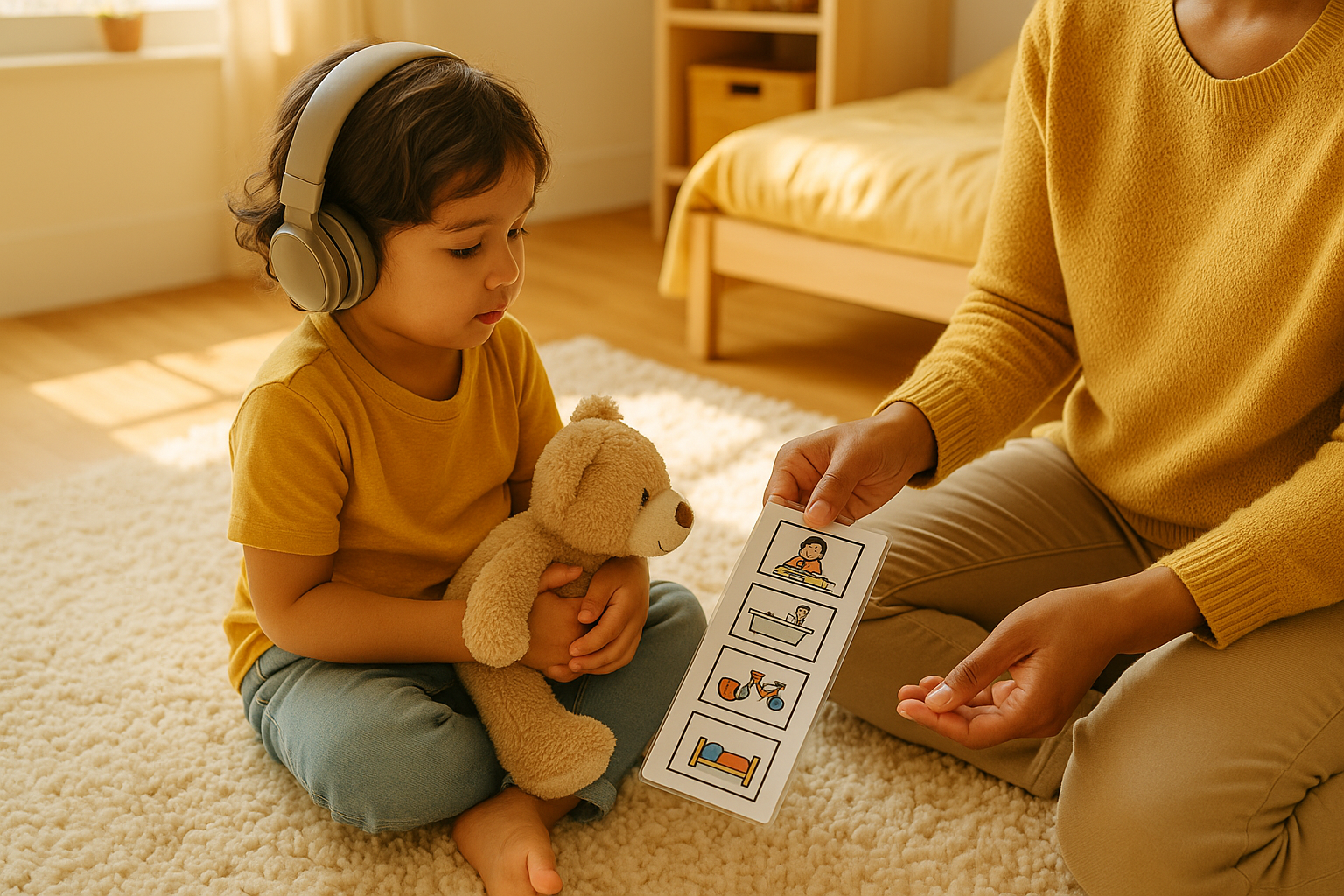
- Predictable sequence: Use a simple visual: “Drive → Meet helper → Play games → Stickers → Home.”
- Co-regulate: Your calm voice and steady breathing are powerful. Children often match our pace.
For families seeking ongoing support with calming strategies, you can explore our regulation support services, which may be recommended after the evaluation based on your child’s individualized needs.
After the evaluation: what happens next
Your therapist will synthesize observations, parent input, and any standardized measures into impressions and recommendations. Next steps may include home strategies, collaboration with school or preschool, and a therapy plan if appropriate. If sensory processing clearly impacts daily life, your therapist may discuss approaches rooted in sensory integration principles, always tailored to your child’s goals (AOTA overview of OT scope; STAR Institute on sensory processing differences).
If questions come up later (they usually do!), write them down. Families often schedule a follow-up to review the report together. When you’re ready to begin, you can book your child’s first visit in Salt Lake City. We welcome families from Salt Lake City and Utah communities seeking thoughtful, play-based care.
Frequently asked questions
- Will my child get a medical diagnosis at the OT evaluation?
- OT does not provide medical diagnoses; we focus on function and participation. For diagnostic questions, consult your pediatrician.
- Can I stay with my child?
- Many clinics invite parent participation, especially with young children. Your therapist will guide you on when it helps to observe, join, or step out briefly.
- How long will therapy last if it’s recommended?
- Duration varies by child and goals. Your therapist will discuss an individualized plan; there is no one-size-fits-all timeline.
Editorial note
This article is educational and not medical advice. It is not a substitute for care from your child’s pediatrician or other qualified professionals. If you have urgent safety or medical concerns, seek immediate help.
References
- What Is Occupational Therapy? American Occupational Therapy Association (AOTA). Accessed 2026. https://www.aota.org/about/what-is-ot
- Developmental Milestones. Centers for Disease Control and Prevention (CDC). Accessed 2026. https://www.cdc.gov/ncbddd/actearly/milestones/index.html
- About Sensory Processing Disorder (SPD). STAR Institute for Sensory Processing. Accessed 2026. https://www.spdstar.org/basic/about-spd
- Anxiety in Children: What Parents Need to Know. American Academy of Pediatrics (HealthyChildren.org). Accessed 2026. https://www.healthychildren.org/English/healthy-living/emotional-wellness/Pages/Anxiety-Disorders.aspx
Ready to take the next step? If an evaluation feels right for your family, we’d be honored to meet your child, listen to your goals, and partner on practical strategies that fit your life. Reach out with questions or request a consultation in Salt Lake City to get started.
Families can also learn about our home and school occupational therapy sessions when that approach fits their goals.
For a related perspective, read What Does a Pediatric Occupational Therapist Do for Young Children?.
How we can help: Home & School Sessions
Flexible care that meets you where you are, addressing challenges in your child's natural environment.
Learn about our Home & School SessionsReady to support your child?
Book a free 20-minute consultation with Lauren to see if SLOT is the right fit.
Book a Free Call