By Lauren | Salt Lake Occupational Therapy
Last updated: September 14, 2026
If your child is gearing up for preschool or kindergarten in Salt Lake City, occupational therapy may help build the everyday skills that make classrooms feel safe, engaging, and doable. Families can expect playful, real-life activities that target self-regulation, fine and gross motor abilities, sensory processing, and independence in routines. OT does not is not a substitute for individualized medical care or may support specific outcomes, and every plan is individualized. A helpful next step is to request a brief consult to discuss your child’s strengths, challenges, and goals.
What “school readiness” really means (beyond ABCs)
School readiness is more than letters and numbers. It’s a blend of developmental skills—attention, emotional regulation, motor coordination, sensory processing, and independence in daily routines—that help children participate, learn, and enjoy school. The American Academy of Pediatrics emphasizes that readiness grows from healthy development, consistent relationships, and supportive environments—not a checklist of academics (AAP). Many of these foundations emerge across early childhood, and parents can watch for broad developmental milestones to guide expectations (CDC developmental milestones).
Core areas OT may support for a smoother start
- Self-regulation and attention: staying calm enough to listen, shifting between activities, and recovering after frustrations.
- Sensory processing: tolerating classroom sounds, bright lights, varied textures, and movement so a child can participate without becoming overwhelmed or disengaged (STAR Institute for Sensory Processing).
- Fine motor and tool use: grasping crayons, using scissors safely, managing paper, and beginning to form shapes and pre-writing strokes.
- Gross motor and posture: core strength for sitting upright, shoulder stability for coloring and cutting, and balance for playground safety.
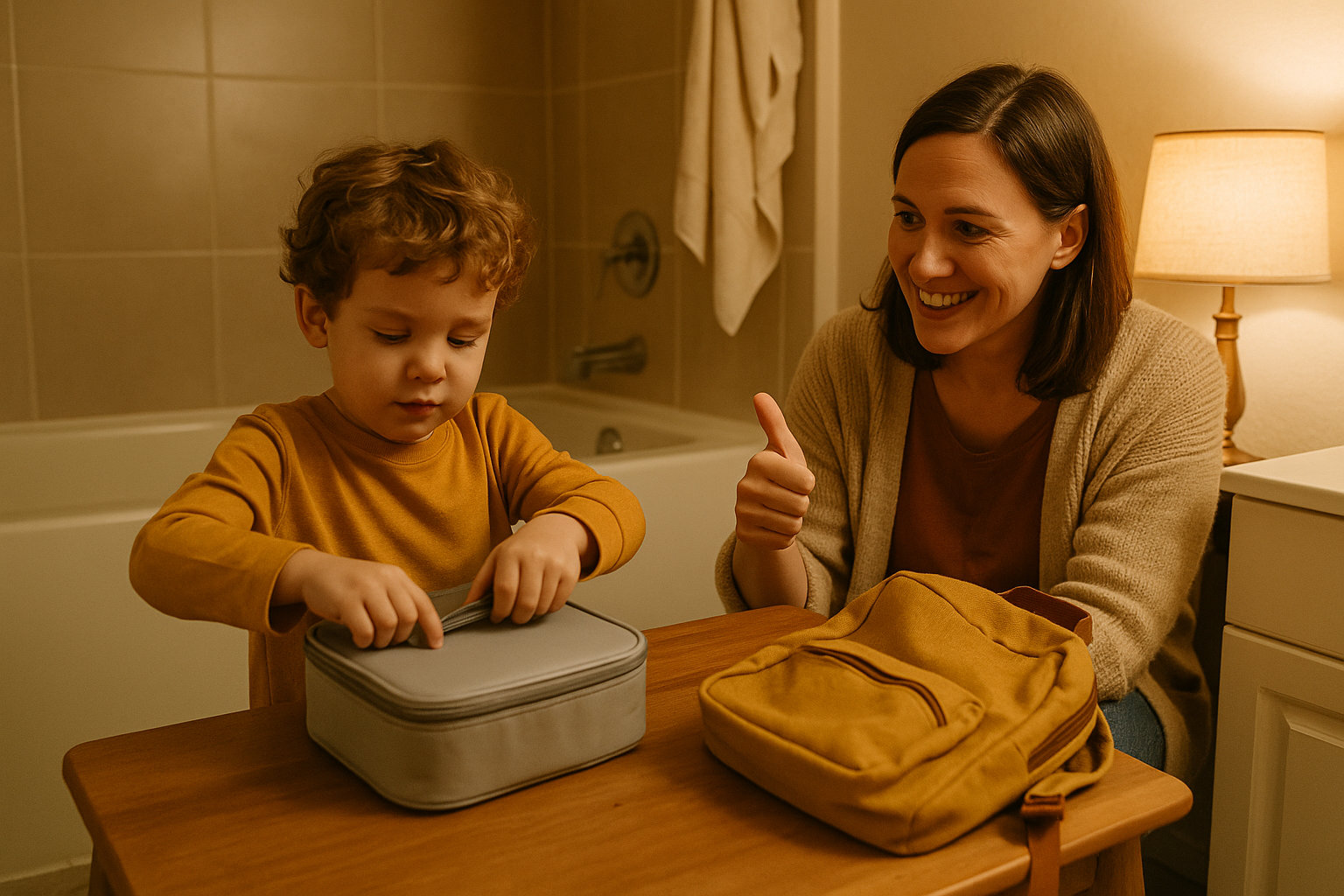
- Independence in routines: zipping coats, opening lunch containers, toileting cues, washing hands, and managing a backpack.
- Social play foundations: turn-taking, shared attention, and simple group routines supported through play and co-regulation.
These are all within an occupational therapist’s scope. OTs look at the whole child and match activities and environments to each child’s sensory, motor, and emotional needs (AOTA: What is OT?).
How pediatric OT builds school-ready foundations in SLC
In Salt Lake City, pediatric occupational therapy often happens in child-friendly clinics, homes, or community settings. No two plans look the same, because no two children are the same.
Your first visit: evaluation and shared goals
- Intake conversation to understand your child’s strengths, challenges, and daily routines.
- Functional observation of play, fine motor tasks, posture, and sensory responses.
- Collaborative goal-setting with your family around participation (for example, “stays seated for circle time for 5 minutes with support” or “zips backpack with minimal help”).
When development or participation questions arise, OTs may reference age-expected skills and red flags using public resources such as the CDC’s Learn the Signs. Act Early milestone checklists (CDC). These tools do not diagnose; they help guide discussion.
Evidence-informed approaches we may use
- Sensory-regulation strategies to support calmer bodies and focused attention (e.g., movement breaks, deep-pressure input, or visual schedules) (STAR Institute).
- Play-based fine motor work (crayon strokes, snips with child-safe scissors, tweezer games) that builds hand strength and coordination for early writing.
- Gross motor and postural control activities (animal walks, scooter boards, obstacle courses) to support stable sitting and endurance.
- Task analysis and environmental tweaks (shorter steps, adaptive grips, or picture routines) that reduce frustration and boost success.
- Caregiver coaching so strategies carry over into mornings, mealtimes, and homework-like tasks.
If your child’s biggest barrier is staying regulated, our service page on regulation support for kids in Salt Lake City explains how individualized sensory and emotional strategies may help children participate more comfortably in groups.
What families can try at home right now
Small, consistent routines make a big difference. Try one or two ideas and build from there:
- Front-load movement: 10 minutes of jumping jacks, animal walks, or a mini-obstacle course before seated play can organize bodies for attention.
- Practice classroom routines playfully: set a timer for “circle time,” sing a short song, then transition to a new activity using a picture card.
- Fine-motor toolbox: keep short crayons, tongs, play dough, stickers, and child-safe scissors in a bin; rotate two activities daily for 5–7 minutes.
- Backpack independence: practice zipping, putting a folder in and out, and opening snack containers during calm, unhurried times.
- Sensory “menu”: notice what calms or energizes your child (rocking, cuddles, crunchy snacks) and build a two- or three-item go-to plan for tricky moments (STAR Institute).
- Visual schedules: simple picture steps for “morning get-ready” or “after school” help reduce verbal nagging and increase follow-through.
If handwriting readiness is a specific concern, you may also like our post on boosting writing readiness in preschoolers for simple, playful ideas.
When to consider extra support in Utah
Every child’s path is unique. Consider reaching out to a pediatric OT if you notice patterns like:
- Meltdowns or withdrawal in loud, bright, or busy settings (stores, birthday parties, or preschool).
- Avoidance of fine-motor tasks (coloring, snipping, puzzles) or fatigue after just a few minutes.
- Difficulty sitting upright, frequent slumping, or falling from chairs.
- Big worries about new places or transitions that do not improve with routine.
- Challenges with self-care steps (zippers, buttons, toileting cues) well beyond peers.
School-based services in Utah may provide supports when challenges affect educational access. Community-based OT can complement school services with individualized, family-centered strategies. If there are safety concerns (e.g., frequent head-banging, choking risks, or regression in skills), contact your pediatrician promptly or seek urgent care.
Getting started in Salt Lake City
If you’re in Salt Lake City, Utah, and wondering whether OT could ease your child’s transition to school, we’re happy to talk through options and answer questions about fit. You can request a consultation to share your goals and explore next steps that align with your child’s needs and your family’s routines.
Editorial note
This article is educational and not medical advice. It does not diagnose or treat any condition. Please consult your pediatrician or qualified professionals for individualized guidance.
References
- American Academy of Pediatrics. School readiness overview. Organization: American Academy of Pediatrics. Accessed 2026. https://www.aap.org
- Centers for Disease Control and Prevention. Learn the Signs. Act Early: Developmental Milestones. Organization: CDC. Accessed 2026. https://www.cdc.gov/ncbddd/actearly
- American Occupational Therapy Association. What is Occupational Therapy? Organization: AOTA. Accessed 2026. https://www.aota.org
- STAR Institute for Sensory Processing. About Sensory Processing. Organization: STAR Institute. Accessed 2026. https://www.spdstar.org
Families can also learn about our home and school occupational therapy sessions when that approach fits their goals.
For a related perspective, read Early Intervention Occupational Therapy for Utah Kids in SLC.
How we can help: Home & School Sessions
Flexible care that meets you where you are, addressing challenges in your child's natural environment.
Learn about our Home & School SessionsReady to support your child?
Book a free 20-minute consultation with Lauren to see if SLOT is the right fit.
Book a Free Call