By Lauren | Salt Lake Occupational Therapy
Last updated: September 12, 2026
Early occupational therapy can help babies, toddlers, and preschoolers who are finding daily routines, play, or sensory-motor skills hard. Families can expect a gentle, play-based evaluation, collaborative parent coaching, and practical strategies that fit into home and community life. Progress looks different for every child; OT is not a substitute for individualized medical care, and timelines vary. If you have concerns, talk with your pediatrician and consider scheduling a pediatric OT evaluation in Salt Lake City. If safety is an issue (choking, regression, dehydration, or injury risk), seek prompt medical attention.
What early intervention occupational therapy means
Early intervention occupational therapy focuses on helping young children participate in everyday activities—like dressing, eating, playing, moving, and communicating needs—in ways that match their development and family routines. Occupational therapists look at the whole child and environment, then partner with caregivers to adapt activities and build emerging skills. This aligns with the profession’s role of supporting meaningful participation in daily life (see the American Occupational Therapy Association).
Early intervention (often birth to five) is not about racing to a finish line. It’s about noticing how a child naturally learns, identifying barriers (motor skills, sensory processing, attention, or routine demands), and using play-based, relationship-centered strategies to support progress. When needed, OTs coordinate with pediatricians, early childhood educators, and other specialists so families receive consistent support across settings.
How early OT differs from “wait and see”
Some children catch up on their own, and brief monitoring can be appropriate in certain cases. However, research highlights the rapid brain development of early childhood and the value of timely supports for learning new skills. Neural pathways are especially adaptable in infancy and early childhood, which means everyday experiences and practice can shape future participation (overview on brain plasticity from NIH News in Health). When questions arise, starting a conversation early may help families put simple strategies in place while clarifying next steps.
Why timing can matter: development, habits, and family routines
- Brain development is dynamic in the first years of life; repeated, positive experiences can strengthen emerging skills and coping strategies (NIH News in Health).
- Early discussion and screening are encouraged in pediatrics so that families can access guidance and community resources when needed. The American Academy of Pediatrics recommends routine developmental surveillance and periodic standardized screening in primary care (Developmental Screening – AAP).
- Acting on concerns may help prevent unhelpful habits from sticking—like avoiding utensils or hair washing due to sensory discomfort—by offering gentle, graded steps instead (learn more about sensory processing differences from the STAR Institute).
None of this means a child “must” achieve a specific milestone by a set date. Every child grows on their own timeline. Early OT simply provides a safe, playful framework to practice the next right step.
Signs your child may benefit from early OT
Consider reaching out if you notice one or more of the following:
- Persistent difficulty with self-care tasks (tolerating toothbrushing, diaper changes, or dressing)
- Challenges with grasping toys, stacking blocks, using utensils, or early prewriting play
- Frequent meltdowns tied to transitions, noise, or touch; or big energy swings during the day
- Limited interest in play with people or toys compared to same-age peers
- Ongoing feeding challenges (e.g., gagging, strong texture refusal) without a known medical cause
- Trouble keeping balance, coordinating new movements, or learning playground skills
If you’re unsure how your child’s skills compare to typical ranges, the CDC’s milestone resources can be a helpful starting point for discussion with your pediatrician (CDC “Learn the Signs. Act Early.”). For a broader overview, you can also read our companion article, When to Seek OT Help: A Guide for Utah Parents.
What families can expect from early OT in Salt Lake City
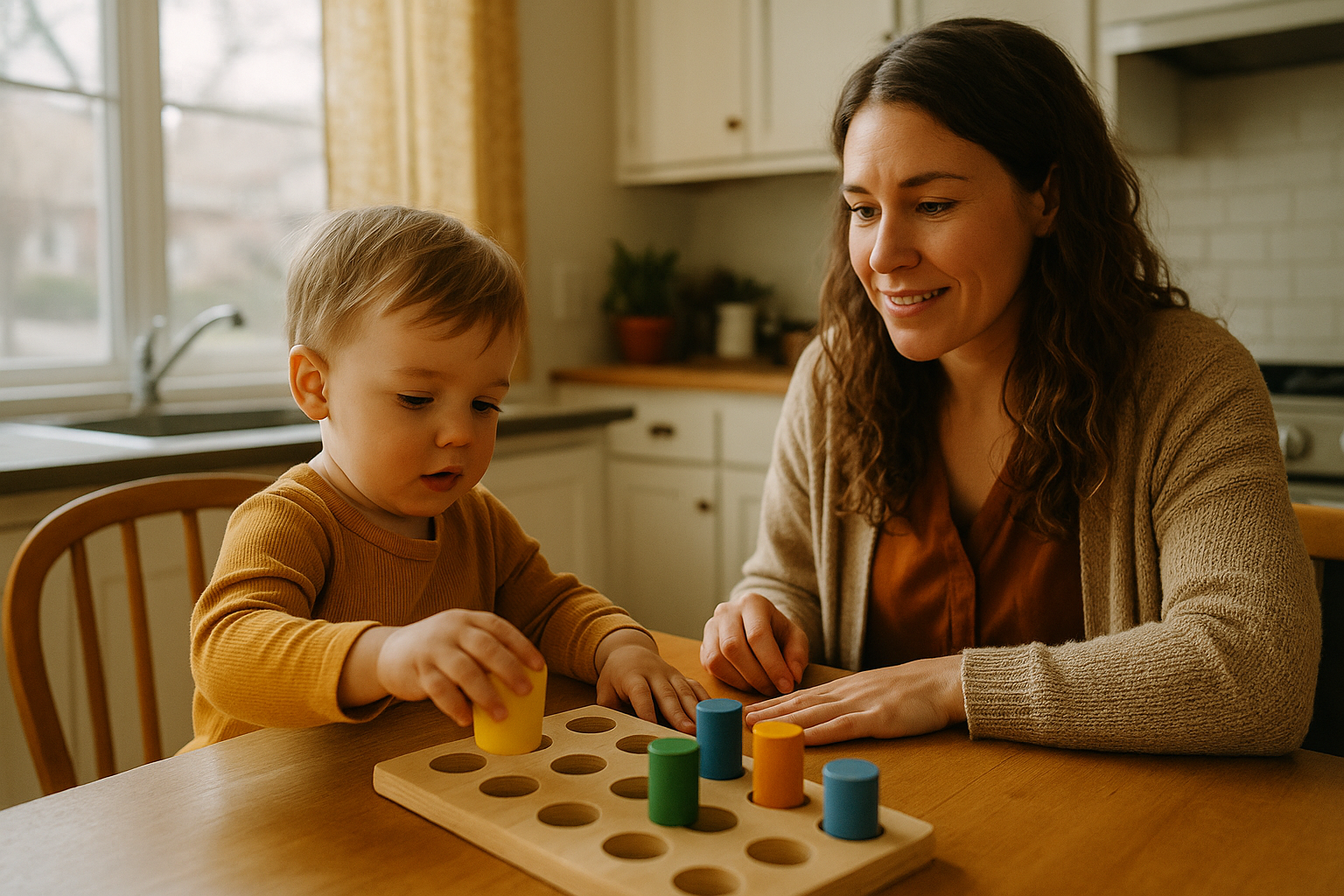
At Salt Lake Occupational Therapy, sessions for young children are play-based and collaborative. We listen to your priorities, observe your child in meaningful activities, and co-create a plan with a few high-impact strategies you can use in daily routines. Examples might include:
- Sensory-informed adjustments to bath time, toothbrushing, or hair care
- Games that build core strength, balance, and body awareness
- Playful ways to expand food exploration and utensil experience
- Simple visual supports to ease transitions and reduce overwhelm
If sensory processing is a key concern, you can learn more about our approach to sensory integration therapy. We also partner with caregivers between visits through our parent coaching approach, which focuses on doable strategies that fit your routines. In Salt Lake City, we actively support local families and coordinate with community providers. For families elsewhere in Utah, please reach out so we can discuss current options and whether we are a fit for your needs. When you’re ready to talk, you can check our current openings and share a bit about your child.
Practical steps you can take now
- Start a notes app or journal: jot down what you’re seeing, when it happens, and what helped. These details make evaluations more personalized and useful.
- Talk with your pediatrician: ask about developmental screening tools and whether an OT referral is appropriate. Routine surveillance and screening are encouraged by pediatric care standards (Developmental Screening – AAP).
- Keep play simple and frequent: floor time, stacking, pretend play, and movement games can nurture motor planning, attention, and social connection. Small, daily doses often add up.
- Use gentle sensory “just-right” challenges: for example, start with a tolerated texture at the table before introducing a new one; or practice hair care with short, predictable steps. Learn more about sensory processing and practical ideas from the STAR Institute.
- Adjust the environment: set up a calm corner, reduce background noise during meals, or use visuals to preview “first-then” steps.
Safety first: If you notice loss of previously learned skills, persistent choking or coughing with feeds, dehydration, or self-injury, contact your pediatrician promptly or call emergency services.
How OT collaborates with your child’s circle
Early intervention often works best when the whole team is connected. With your permission, we communicate with pediatricians, early educators, and other therapists so your child experiences consistent strategies across home, childcare, and community settings. OT can also share observations that may inform school planning as your child approaches preschool or kindergarten. If support in both environments is a priority, families sometimes explore our home and school occupational therapy sessions.
Editorial note
This article is educational and not medical advice. It does not diagnose, treat, or replace care from your child’s healthcare providers. If you have urgent concerns about safety or health, seek professional help immediately.
References
- Learn the Signs. Act Early. Centers for Disease Control and Prevention (CDC). Accessed 2026. https://www.cdc.gov/ncbddd/actearly
- Developmental Screening. HealthyChildren.org, American Academy of Pediatrics (AAP). Accessed 2026. https://www.healthychildren.org/English/ages-stages/Pages/Developmental-Screening.aspx
- What Is Occupational Therapy? American Occupational Therapy Association (AOTA). Accessed 2026. https://www.aota.org
- The Growing Brain: Inside the Developing Mind. NIH News in Health. 2017. Accessed 2026. https://newsinhealth.nih.gov/2017/08/growing-brain
- What Is Sensory Processing Disorder? STAR Institute for Sensory Processing. Accessed 2026. https://www.spdstar.org
We’d love to learn about your child and your goals. If you’re in Salt Lake City—or elsewhere in Utah and exploring options—reach out to see whether our approach may be a good fit and to discuss next steps for an occupational therapy evaluation.
For a related perspective, read What Does a Pediatric Occupational Therapist Do for Kids?.
How we can help: Home & School Sessions
Flexible care that meets you where you are, addressing challenges in your child's natural environment.
Learn about our Home & School SessionsReady to support your child?
Book a free 20-minute consultation with Lauren to see if SLOT is the right fit.
Book a Free Call